


Humpty Doo Barramundi: Australian Barramundi Grown in the Top End

When chefs talk about Australian barramundi, few names have a story quite like
Humpty Doo Barramundi.

Grown in the Northern Territory, between Darwin and Kakadu National Park, Humpty Doo Barramundi has developed from a pioneering family aquaculture operation into one of Australia's most recognised producers of premium Australian saltwater barramundi.
For restaurants, hotels, pubs, caterers and hospitality groups looking to put more Australian seafood on their menus, it represents something increasingly important: a consistent Australian product with genuine provenance and independently recognised environmental credentials.
From 300kg to More Than 6,000 Tonnes
The Humpty Doo story began in 1993 alongside the Adelaide River in Australia's Northern Territory.
In its first year of sales, the farm harvested approximately 300 kilograms of barramundi.
Today, Humpty Doo Barramundi states that its annual production has grown to more than 6,000 tonnes.
Despite that growth, the business remains 100% Australian family owned and operated (much like us at Red Coral Seafood!)

More than three decades of development have gone into improving the way its barramundi are grown, including investment in hatchery technology, fingerling nurseries, water management, feeding systems and aquaculture research.
That scale is particularly relevant to foodservice.
Chefs don't only need a great fish.
They need a product that can be supplied consistently, portioned effectively, incorporated across different menu styles and supported by a reliable Australian supply chain.
Saltwater Barramundi Grown in the Northern Territory
Barramundi naturally inhabit tropical coastal waters, estuaries and river systems across northern Australia.
Humpty Doo grows its barramundi in saltwater ponds designed to provide an environment suited to the species.
The result is a fish with the characteristics that have made barramundi such an important species in Australian foodservice: mild flavour, moist white flesh and versatility across different cooking methods and cuisines.
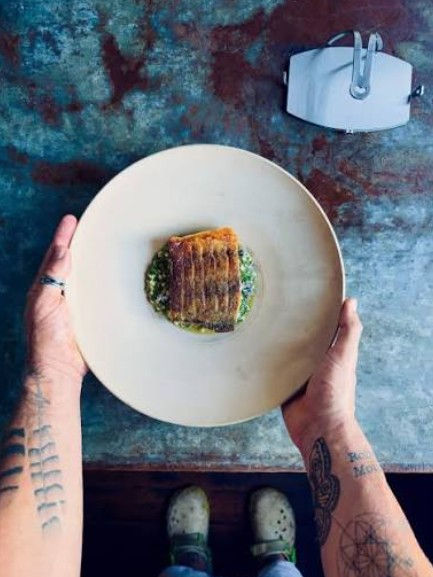
It can be:
pan fried
grilled
roasted
steamed
battered
crumbed
cooked over charcoal
used in curries
incorporated into Asian dishes
portioned for banquets and functions
and even used in sushi applications!
That versatility is one of barramundi's biggest commercial advantages.
One species can potentially work across a pub menu, premium restaurant, hotel banquet operation, Asian restaurant or high-volume catering environment.
An Innovative Wetland Water System
One of the most interesting parts of the Humpty Doo operation is what happens to the water.
The farm has developed an award-winning wetland water recirculation system.
Water from the production system moves through purpose-built wetlands where natural grasses and biological processes help remove nutrients before the water is recirculated through the farm.
Humpty Doo says the system allows it to retain approximately 99% of nutrients on the farm, resulting in an ultra-low-discharge operation.
For an aquaculture business operating beside one of northern Australia's important river and wetland environments, responsible water management isn't just a marketing exercise.
It's fundamental to the long-term viability of the farm.
Australia's First ASC-Certified Barramundi Farm
In December 2025, Humpty Doo Barramundi achieved another significant milestone.
It became the first Australian barramundi farm to achieve Aquaculture Stewardship Council (ASC) certification.
ASC is an internationally recognised certification program for responsibly farmed seafood.
Certification involves independent assessment against standards covering areas including environmental performance, fish welfare, responsible farming practices, employees and surrounding communities.
For chefs and procurement teams, certification provides something increasingly valuable:
independent verification.
Rather than relying solely on sustainability claims made by a producer or supplier, buyers can look for recognised third-party certification when developing seafood procurement policies.
Humpty Doo's achievement was followed in 2026 when it was named ASC Best Responsible Seafood Producer at the Sustainable Seafood Awards Australia.
The business was also named Primary Producer (Large) at the 2026 Northern Territory Seafood Industry Awards.
Why Provenance Matters More Than Ever
Australian hospitality entered a new era of seafood transparency on 1 July 2026.
Restaurants, cafés, pubs and other hospitality businesses serving seafood for immediate consumption must now identify seafood using Australia's new country-of-origin system:
A – Australian, I – Imported, M – Mixed Origin
For venues using Australian barramundi, this creates an opportunity rather than simply another compliance requirement.
A menu can now clearly communicate:
Australian Barramundi (A)
But operators can go further.
Instead of treating the "A" purely as a regulatory requirement, provenance can become part of the dish:
Northern Territory Saltwater Barramundi
or
Humpty Doo Australian Barramundi
For premium restaurants and hotels in particular, identifying the producer gives the kitchen a story that guests can understand.
The producer, location and farming method become part of the value proposition of the dish.
A Fish Designed for Modern Australian Menus
Barramundi occupies an interesting position for chefs.
It is distinctly Australian, but its flavour profile isn't restrictive.
Its relatively mild flavour means it can carry bold sauces and accompaniments without competing with them.
Think:
Crispy Skin Barramundi with beurre blanc, greens and roasted potato.
Charcoal Barramundi with fermented chilli, herbs and lime.
Barramundi Thai Green Curry
Miso Barramundi with dashi and seasonal vegetables.
Beer Battered Australian Barramundi with chips and house tartare.
Or even:
Barramundi Sushi and Sashimi Applications
Humpty Doo has recently been working with Sushi Izu, with its Australian barramundi appearing in sushi applications nationally.
It's an interesting development because it challenges the idea that barramundi needs to remain within the traditional "grilled fish fillet" section of a menu.
For chefs, that's where the species becomes particularly interesting.
Consistency Matters in a Commercial Kitchen
There's another part of sustainability that receives less attention in foodservice:
yield.
A sustainable fish that produces poor usable yield, inconsistent sizing or excessive kitchen waste creates its own commercial problems.
Professional kitchens need predictable portioning and food cost.
Working with a consistent farmed product can help kitchens establish specifications around:
fish size
fillet size
portion weight
trim requirements
preparation method
plate cost
and expected yield.
For large hospitality groups, hotels and catering operations, those specifications can be just as important as the flavour of the fish itself.

Supporting Australian Seafood
Choosing Australian seafood also supports an extensive domestic supply chain.
Behind a barramundi fillet are hatchery technicians, aquaculture specialists, processing teams, refrigeration technicians, transport companies, seafood wholesalers, chefs and hospitality workers.
Humpty Doo's growth from a small pioneering farm into a major Australian aquaculture producer demonstrates what can happen when long-term investment, technology and food production come together.
And with country-of-origin labelling now visible on Australian menus, diners have more information than ever before when deciding what seafood they want to eat.
For hospitality operators, that makes the conversation around Australian seafood easier.
From the Northern Territory to the Professional Kitchen
There is something inherently Australian about barramundi.
But what makes Humpty Doo particularly interesting from a foodservice perspective is the combination of Australian ownership, Northern Territory provenance, saltwater production, commercial scale and independently certified responsible aquaculture.
For chefs, that creates a product with a story behind it.
For procurement teams, it provides traceability and recognised credentials.
And for diners, it means the simple letter "A" appearing beside a barramundi dish can represent much more than country of origin.
It can represent an Australian seafood industry that is investing in how we produce food for the future.
For Foodservice Enquiries
Speak with your Red Coral Seafoods Account Manager about Humpty Doo Australian Saltwater Barramundi, available specifications and options suitable for your menu.
Australian seafood. Genuine provenance. Built for professional kitchens.


Comments